Clogged Drain Repair
One slow sink, tub or toilet? A provider finds where the clog sits and clears it without harsh chemicals.
View service (970) 693-9705
A camera on a flexible cable shows what is actually inside your sewer line: roots, cracks, sags, grease or an old pipe that is wearing thin. In Loveland, where houses range from 1900s homes on West 5th Street to brand-new builds east of I-25, that view replaces a lot of guesswork.
Loveland Drain Clean is a free referral service, not a plumbing company. Calls are answered by independent local providers who set their own prices.

A sewer camera inspection in Loveland means a provider feeds a waterproof camera through a cleanout or toilet opening into your main sewer line, records the run toward the city main, and pinpoints roots, cracks, offset joints, sags or aging clay and Orangeburg pipe. The recording tells you whether the line needs cleaning, a spot repair or nothing at all.
A sewer camera inspection is a video survey of the pipe that carries everything from your house to the city sewer. A small, waterproof camera head with its own lights sits on the end of a stiff, flexible push cable. The provider feeds it into the line through an access point, and a monitor at the surface shows the inside of the pipe in real time while a counter on the reel tracks how far the camera has traveled.
Most sewer cameras also carry a radio transmitter, often called a sonde, in the camera head. When the camera stops at a problem, the provider walks the yard with a locator to find the spot on the surface and how deep it is. That turns a vague diagnosis like somewhere under the lawn into a mark on the ground and a depth.
The point is to see before anyone spends money. A slow or backed-up drain can have very different causes: a soft grease clog that a cleaning will clear, a root mass at a single joint, a pipe that has sagged into a belly that holds water, or a section of old clay or fiber pipe that is falling apart. Each one calls for a different fix, and they look completely different on camera. A good inspection ends with a recording and a plain explanation of what it shows.
A camera inspection is also the step that comes before most other sewer work. It is how a provider confirms a line is clear after cleaning, how they plan a repair and how they check whether a trenchless method can be used. If you are comparing options from more than one contractor, a clear recording you can share is one of the most useful things you can have.
The provider looks for a sewer cleanout, usually a capped pipe in the basement, crawl space, garage or yard near the foundation. If none is reachable, a toilet can be pulled to reach the line, or the provider will explain other options.
Before the camera goes in, the provider may run water to see how the line drains. If the pipe is badly blocked, it often has to be cleared first so the camera can see past the standing water.
The camera is fed slowly toward the city main while the provider watches the monitor. They stop at joints, transitions between pipe materials, roots, cracks and any spot where water pools.
At each issue, a locator picks up the signal from the camera head so the provider can mark the spot in the yard and estimate its depth. This matters for planning any repair under a driveway, patio or mature tree.
The provider shows you the footage, explains what each finding means and what they would recommend. Ask for a copy of the video and the distances so you can keep it or show it to someone else.
If the main line has been snaked more than once in a year or two, something is catching debris. A camera finds the root mass, offset joint or sag that keeps causing it.
When a tub, a toilet and a floor drain all slow down together, the problem is usually in the main line rather than a single fixture.
Air pushing back through a toilet or water rising in a basement floor drain when the washer empties points to a restriction further down the line.
Large trees, including the ash trees that are common on older Loveland streets, send roots toward the moisture at leaky joints.
Houses from the early 1900s through the 1970s may have clay, cast iron or Orangeburg pipe that is at or past its expected life.
A wet, unusually green strip of lawn or a sewer odor in the yard can point to a cracked or separated pipe underground.
Sewage in the basement at night? Stop using water and call now.Open 24/7 · Talk to a local provider in Loveland
Call 24/7 (970) 693-9705Roots. The City of Loveland counts roughly 25,000 public trees, and ash makes up about 20 percent of that canopy. Emerald ash borer was confirmed in Loveland in 2024, and the city has been removing ash trees for years. Roots from living trees push into any joint that leaks a little moisture, and roots from trees that have been cut down can rot and leave voids around a pipe. Both show up on camera.
Ground movement. The Colorado Geological Survey calls expansive soil the state's most significant geologic hazard and lists disrupted sewer lines among the damage it causes. Clay soil that swells when wet and shrinks when dry can shift a pipe joint out of line or create a sag where water and solids settle. On camera, an offset joint looks like a step or lip; a belly shows as a stretch of standing water.
Old pipe materials. Older Colorado neighborhoods often have vitrified clay pipe. Boulder's sewer program, for example, notes that clay pipe from the 1940s to the 1960s cracks as soils shift. Orangeburg pipe, made from wood fiber and coal tar, was used until the 1970s and has about a 50-year life at best; on camera it often looks blistered or flattened into an oval. Cast iron can corrode and scale on the inside.
Grease and wipes. The city warns that fats, oils and grease can plug sewer lines and cause backups that damage homes. A camera shows grease as a coating or a lumpy buildup along the bottom of the pipe, often with wipes caught in it.
Ask the provider to narrate the recording or note the distance at each finding, then save the file somewhere you can find it. If you sell the house, plan a repair or call a different contractor later, a dated video of your line is worth having.
A camera earns its keep any time the answer will change what you do next. That includes recurring main-line clogs, a house purchase, a remodel that adds a bathroom or basement bath, a line that backed up after heavy roots were cut, and any time a contractor recommends digging or replacement. Seeing the pipe first is how you avoid paying for a full replacement when a single bad joint is the problem, or paying for repeated cleanings when the pipe itself is broken.
It is less useful for a single slow sink or a tub that drains poorly while everything else in the house works fine. Those clogs are usually in the fixture's own drain and trap, and a provider can typically clear them without a camera. A camera also cannot see through a line that is completely full of water; if the main is backed up, it usually has to be opened first.
After a cleaning, a quick camera pass confirms the job. If roots were cut or grease was cleared with hydro jetting Loveland, the footage shows whether the pipe walls are clean and whether there is damage underneath that will cause the problem to return.
Water coming up in the floor drain? Call (970) 693-9705 for a local provider.Open 24/7 · Talk to a local provider in Loveland
Call 24/7 (970) 693-9705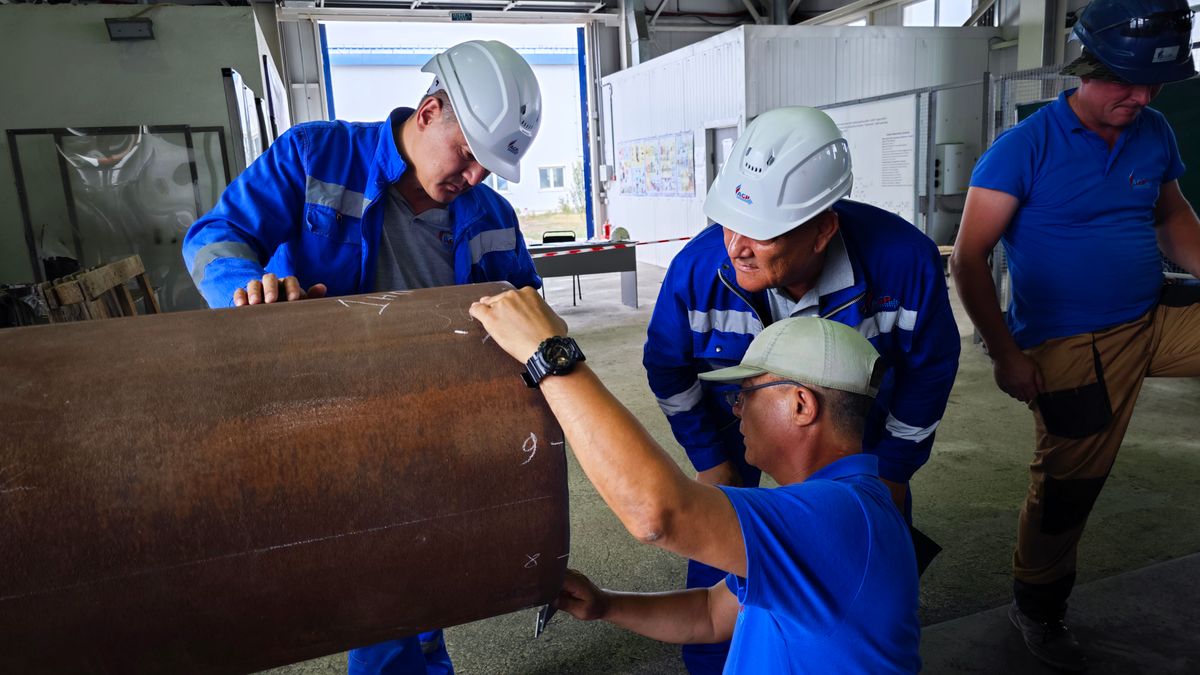
The provider asks what you have noticed and checks the drains themselves, often by running water at a few fixtures.
They open the cleanout or pull a toilet, lay out drop cloths and set up the camera reel and monitor.
The camera is pushed through the line, often all the way to the connection near the street. You can usually watch the monitor as it goes.
Any problem spots are located from the surface and marked with paint or flags, with an estimated depth.
You get an explanation of what the footage shows and the options, from no action to cleaning to repair. Ask for a copy of the recording and for any pricing in writing before you agree to more work.
More than one drain slow at once? That points to the main line. Talk it through on the phone.Open 24/7 · Talk to a local provider in Loveland
Call 24/7 (970) 693-9705| Question | With a camera inspection | Without one |
|---|---|---|
| Why does the line keep clogging? | You see the root mass, sag or broken joint directly | Cleaning clears it for now, cause unknown |
| Where is the problem? | Distance and depth are located and marked | Location is guessed, digging may be wider |
| Does it need replacing? | Pipe condition is visible along the whole run | Decision rests on the contractor's opinion |
| Can trenchless work be used? | Pipe shape, size and condition can be checked | Suitability unknown until digging starts |
| Was the cleaning successful? | A follow-up pass shows clean pipe walls | You find out when the next backup happens |
| Factor | Why it matters | What to ask on the call |
|---|---|---|
| Access | A ready cleanout is quicker than pulling a toilet or working through a roof vent. | Do you have a cleanout, and is it accessible? |
| Line condition | A line that is backed up usually needs clearing before the camera can see anything. | Is cleaning included or separate if the line is blocked? |
| Length and depth of the line | Longer runs and deeper pipes take more time to inspect and locate. | How far will the camera go, all the way to the main? |
| Locating and marking | Finding and marking problems from the surface adds time but is essential for repair planning. | Will problem spots be located and marked in the yard? |
| Recording and report | Some providers include a video file and written notes; others charge separately. | Will I get a copy of the recording and the findings? |
A camera inspection is a planning tool, but you may be reading this because a floor drain is overflowing. Stop running water in the house first: no laundry, dishwasher, showers or flushing. If sewage is coming up in a basement, keep people and pets away from it and turn off power to the area only if you can do so without standing in water.
Call (970) 693-9705 and say the line is backing up. The provider you are connected with will usually clear the line first and then run a camera once water is flowing, so the inspection can see the cause. If you think the backup may be coming from the city's main rather than your own line, for example because neighbors are reporting the same thing, call Loveland Water and Power at 970-962-3000 as well. Until the line is open, keep water use to an absolute minimum.
Sewage in the basement at night? Stop using water and call now.Open 24/7 · Talk to a local provider in Loveland
Call 24/7 (970) 693-9705Never open a cleanout cap on a line that is backed up unless you are prepared for sewage to come out under pressure. Leave that to the provider, and stay out of standing sewage, which can carry bacteria and hide electrical hazards.
Camera footage can be hard to read the first time. A healthy pipe looks like a smooth, round tube with water flowing along the bottom. Joints appear as faint rings at regular intervals on older clay pipe. A crack shows as a dark line, a broken section as missing wall, and an offset joint as a step where one section sits higher than the next. Standing water that covers the camera lens usually means a sag. Roots look like hair or a brush poking in at a joint. Ask the provider to pause at each finding and explain it.
The findings point to the next step. Light grease or a few roots often call for cleaning and a follow-up check. A single broken or separated joint may be a spot repair. A long run of cracked clay or deformed Orangeburg points to sewer line repair Loveland or a larger project, and many of those can be handled with trenchless sewer repair Loveland if the pipe's shape allows. In older neighborhoods such as the historic core, our page on Downtown Loveland drain cleaning explains the pipe materials you are most likely to find. If trees are the issue, read about ash tree roots in sewer lines before deciding on a long-term plan.
Before any repair work, confirm the contractor's Colorado license. Plumbers in Colorado are licensed by the state's Examining Board of Plumbers at the Division of Professions and Occupations, and plumbing contractors are registered there too. You can look up a license on the state's DORA license lookup. Calls to (970) 693-9705 are answered by independent local providers who set their own prices, so ask for the price before the camera goes in.
A camera look often comes after a clog is cleared; the drain cleaning Loveland overview explains how the services fit together.
It is a sensible step. The city's West 5th Street Historic District is made up mostly of houses built between 1900 and 1910, plus several from the 1890s. Any original sewer pipe that old has seen more than a century of roots and ground movement, and many lines have been patched or replaced in sections since. A camera shows which materials you actually have, where the old joints and past repairs are, and whether any of them are failing.
The City of Loveland's newsletter says that when a clog is in the home's sewer lines, it is the homeowner's responsibility. We could not find a published description of exactly where that responsibility ends near the street, so ask Loveland Water and Power at 970-962-3000 before any repair close to the main. A recording with a distance reading makes that call much easier.
Mostly, yes. The city's 2024 water report lists average hardness of about 27 mg/L, roughly 1.6 grains per gallon, which the city calls soft. Heavy mineral scale is less common here than in hard-water towns, so when a camera shows a narrowed pipe in Loveland, grease, roots or a physical defect is the more usual explanation.
Yes. Roots show up clearly, from fine hair-like strands at a joint to thick mats that nearly fill the pipe. Ash trees make up about a fifth of Loveland's public tree canopy, and many older streets have mature trees growing close to the sewer lateral. The recording shows how far roots have gotten and whether a joint has opened up to let them in.
Many buyers do, especially for older homes or properties with large trees. A standard home inspection usually stops at the fixtures and does not look inside the sewer line. Our article on sewer scope before buying a house explains what to ask for and what the recording should include.
Usually not. The camera goes in through an existing cleanout, or through a toilet opening if no cleanout is reachable. Digging only comes up if the recording shows a repair is needed, or in the rare case where there is no access at all and the provider recommends installing a cleanout first.
One slow sink, tub or toilet? A provider finds where the clog sits and clears it without harsh chemicals.

Roots, a cracked joint or a sag in the line out to the street, fixed at the damaged spot.

For worn clay, cast iron or Orangeburg pipe that keeps failing, replace the run instead of patching it again.

High-pressure water scours grease, sludge and fine roots off the pipe wall, not just a hole through the clog.

Lining or bursting a damaged line through small access pits can save lawns, trees and driveways.

Sewage at the floor drain or every fixture backing up? Calls are answered day and night.


Representative photos of the kind of work local providers handle.
Talk to a local provider
One call connects you with an independent drain and sewer contractor who works in Loveland. They explain the likely cause and how the price is set before any work starts.
(970) 693-9705