Downtown Loveland Drain Cleaning
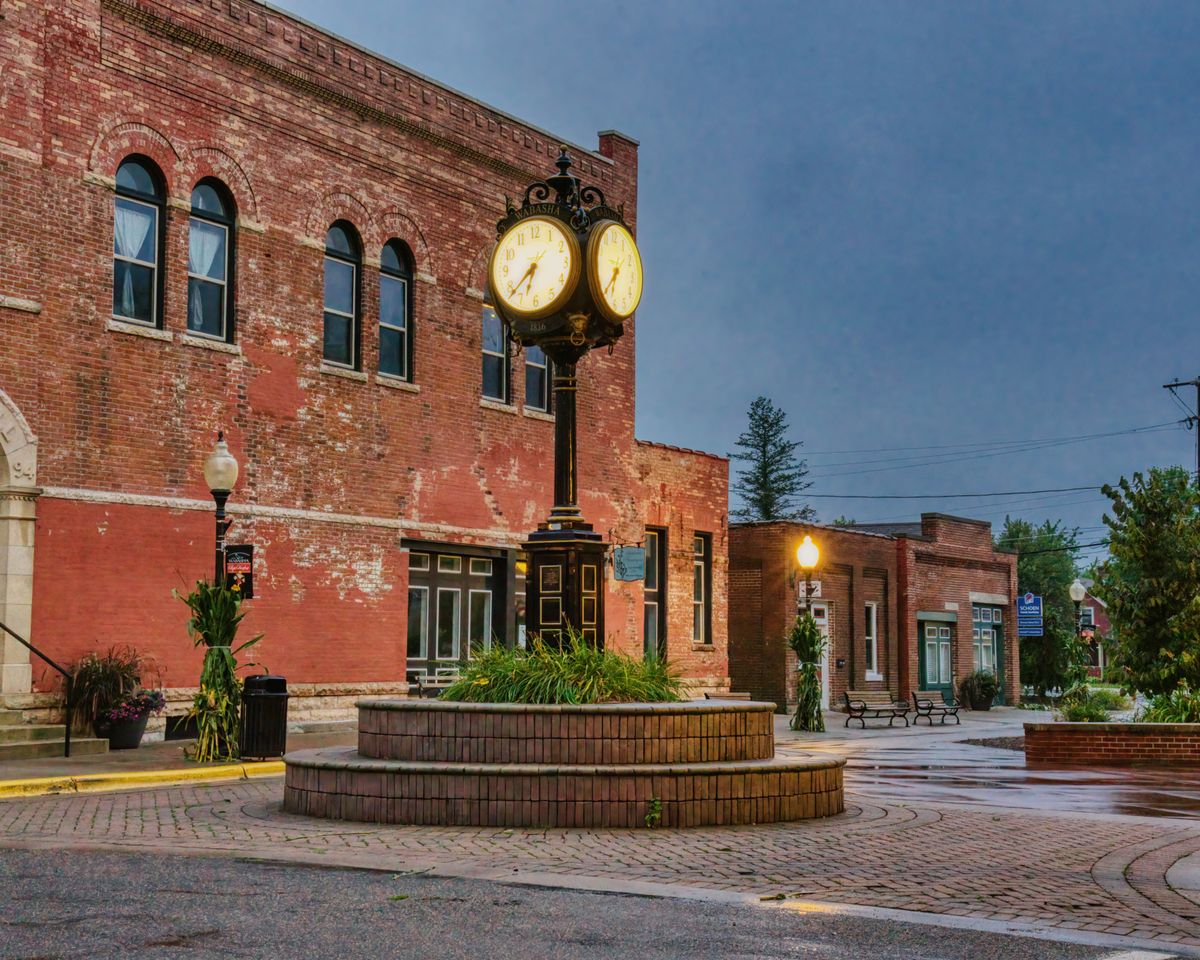
Loveland's historic core grew up around the railroad depot in the late 1800s. Many houses and buildings near 4th Street and West 5th Street are more than a century old, and so are some of the drain and sewer lines under them.
On this page
- What makes drain cleaning different in Downtown Loveland
- Four services Downtown Loveland homes need most
- Old pipe materials you may find downtown
- Care tips for older downtown homes
- Downtown Loveland homeowner's checklist
- Around Downtown Loveland
- Who handles what when an old line fails
- Map of the Downtown Loveland area
- FAQ
Downtown Loveland, in ZIP code 80537, has the city's oldest buildings, with many houses from 1900 to 1910 on West 5th Street and commercial blocks around East 4th Street. Older sewer lines here are often clay, cast iron or Orangeburg, and they tend to fail at joints and under tree roots. Local providers start with a camera to see what is actually in the ground.
What makes drain cleaning different in Downtown Loveland
Loveland began in 1877, when the Colorado Central Railroad crossed the Big Thompson River. David Barnes donated land for the depot and platted an 80-acre town site, and he named it for railroad president W.A.H. Loveland rather than for himself. The town incorporated on April 30, 1881. The streets that grew up around that depot are today's downtown, and when the city surveyed its historic resources in 1999, it looked at more than 2,300 historic properties.
That history is the local quirk. Many downtown houses were built before modern plumbing materials existed, and some predate the city's wastewater treatment, which began in 1902. Over the following century their sewer laterals were often replaced in pieces: a section of clay here, cast iron under the house, perhaps a stretch of Orangeburg fiber pipe put in during the mid-1900s, and plastic where a past owner made a repair. Each transition between materials is a joint, and old joints are where roots get in and where shifting soil pulls pipe out of line.
Trees matter here too. Older blocks tend to have mature trees in parkways and yards, and ash makes up roughly a fifth of Loveland's public canopy. With emerald ash borer confirmed in the city in 2024, some of those trees are being removed, which can leave decaying roots in the soil around old pipe. Add Colorado's expansive clay soils, which the state geological survey lists as a known cause of disrupted sewer lines, and it is easy to see why a downtown drain that keeps clogging usually has a physical cause.
The practical upshot is that a downtown provider should look before guessing. A camera run through the lateral shows the materials, the joints, any roots and any sag, and it lets you make a decision about cleaning or repair based on what is really there.
Four services Downtown Loveland homes need most
Sewer camera inspection
With mixed old pipe materials, seeing the line comes first. A sewer camera inspection Loveland shows each joint, transition and root intrusion along the lateral.
Hydro jetting
Root growth and old buildup in clay lines often need more than a cable. Hydro jetting Loveland scours the full pipe wall, though the provider should check that brittle pipe can take it.
Sewer line repair
A single cracked or separated joint in an old lateral can often be fixed on its own. Sewer line repair Loveland covers spot repairs and when they make sense.
Sewer line replacement
When a run of century-old pipe is failing throughout, patching may not be worth it. Sewer line replacement Loveland explains the options and the permits involved.
Old pipe materials you may find downtown
| Material | What it is | Typical trouble |
|---|---|---|
| Vitrified clay | Fired clay pipe in short sections with many joints | Root entry at joints, cracks as soil shifts |
| Cast iron | Heavy metal pipe, often under or inside the house | Internal corrosion, scale and rough walls that catch debris |
| Orangeburg | Wood fiber and coal tar pipe used until the 1970s | Blistering, flattening and collapse with age |
| Plastic (PVC or ABS) | Newer pipe from later repairs | Sound itself, but joints to old pipe can leak or shift |
Water coming up in the floor drain? Call (970) 693-9705 for a local provider.Open 24/7 · Talk to a local provider in Loveland
Call 24/7 (970) 693-9705Care tips for older downtown homes
- Keep a record of any camera footage and past sewer repairs, and pass it on if you sell.
- Collect cooking grease in a container rather than the sink; the city offers Fat Trapper kits for this.
- Ask before planting new trees over the likely path of the sewer lateral.
- If an ash tree near the line is removed, ask about having the line checked in the following years.
Downtown Loveland homeowner's checklist
- Know roughly when your house was built and whether the sewer has ever been replaced.
- Find your sewer cleanout, often in the basement or near the foundation.
- Note which drain backs up first and how often it happens.
- Know whether the property is a rental or has a business on site.
- Keep Loveland Water and Power's number, 970-962-3000, for questions about the city main.
Around Downtown Loveland
Downtown sits in ZIP code 80537 at the center of a city of about 81,000 people, at roughly 4,997 feet of elevation and about 46 miles north of Denver. The historic commercial blocks around East 4th Street and Railroad Avenue give way to older residential streets to the west, including the West 5th Street district, and to neighborhoods that filled in through the 20th century. The Big Thompson River, the reason the railroad and the town settled here, runs to the south.
Heading out from downtown, housing gets younger. Southwest Loveland, toward Mariana Butte, is mostly homes from the 1990s. East of I-25, the Centerra area and its neighborhoods were built in the 2000s and later. Those newer areas have different drain problems, so it helps to tell the provider your home's age when you call. Coverage is always confirmed by address on the call to (970) 693-9705.
More than one drain slow at once? That points to the main line. Talk it through on the phone.Open 24/7 · Talk to a local provider in Loveland
Call 24/7 (970) 693-9705Who handles what when an old line fails
When an old downtown sewer lateral clogs, the first question many owners ask is whether the city will fix it. The City of Loveland's newsletter is clear that a clog in the home's sewer lines is the homeowner's responsibility. Exactly where the owner's portion ends near the street is not something we found spelled out, and in older parts of town the lateral may run under a sidewalk or parkway. Before any repair near the property line, call Loveland Water and Power at 970-962-3000 and ask how they treat your section.
If work needs to happen in the street or sidewalk, the City requires a Major Right-of-Way permit for any excavation there. The permit is valid for 90 days and inspections must be requested 48 hours ahead, so a provider should plan that into the schedule. Inside the property, building permits apply to alterations, and a homeowner affidavit lets owners do their own work on a primary residence.
For the repair itself, use a licensed plumber. Colorado licenses plumbers through the state Examining Board of Plumbers, and you can check any license on the DORA license lookup. Loveland Drain Clean is a referral service: when you call, you are connected with an independent provider who sets their own prices and is responsible for the work. For a broader overview of services across the city, start with drain cleaning Loveland.
Map of the Downtown Loveland area
Questions people in Loveland ask
How old are the houses on West 5th Street?
The city's West 5th Street Historic District covers 355 to 747 W. 5th St. Its land additions were platted between 1883 and 1919, most of the houses were built between 1900 and 1910, and seven date from the 1890s. Few original sewer laterals of that age survive unchanged, so expect a mix of old pipe and later repairs.
Where exactly is the Downtown Loveland Historic District?
It covers about nine blocks centered on East 4th Street, running from Railroad Avenue east toward Jefferson and Washington Avenues. The district's period of significance runs from 1878 to 1965 and includes the Rialto Theater and the Colorado and Southern depot buildings at 409 to 427 N. Railroad Ave.
Do I need special approval to fix the sewer under a historic house?
A sewer repair is normally a plumbing matter rather than a change to the building's historic look, but the City of Loveland requires building permits for alterations, and any excavation in the city right-of-way needs a Major Right-of-Way permit. If the house is on a local historic register, ask the city's historic preservation staff whether anything else applies before digging near the front of the property.
My downtown building has an apartment upstairs. Does that change anything?
It can. The City of Loveland requires a city contractor's license for plumbing work on rentals, multi-family and non-residential buildings. Ask the provider you are connected with to confirm they hold one, or check with the Building Division at 970-962-2505.
Is my water line also old?
Possibly. Loveland Water and Power says the water service line from the street main into the home belongs to the customer, and that lead service lines were common before 1960. That is a separate pipe from the sewer, but if a contractor is already digging, it is worth asking what your water line is made of.
Talk to a local provider
Get downtown loveland sorted in Loveland today
One call connects you with an independent drain and sewer contractor who works in Loveland. They explain the likely cause and how the price is set before any work starts.
(970) 693-9705Call 24/7 now